
 Support@cbd-international.clinic




Blog
How Fibromyalgia can affect Intimacy and Sexuality

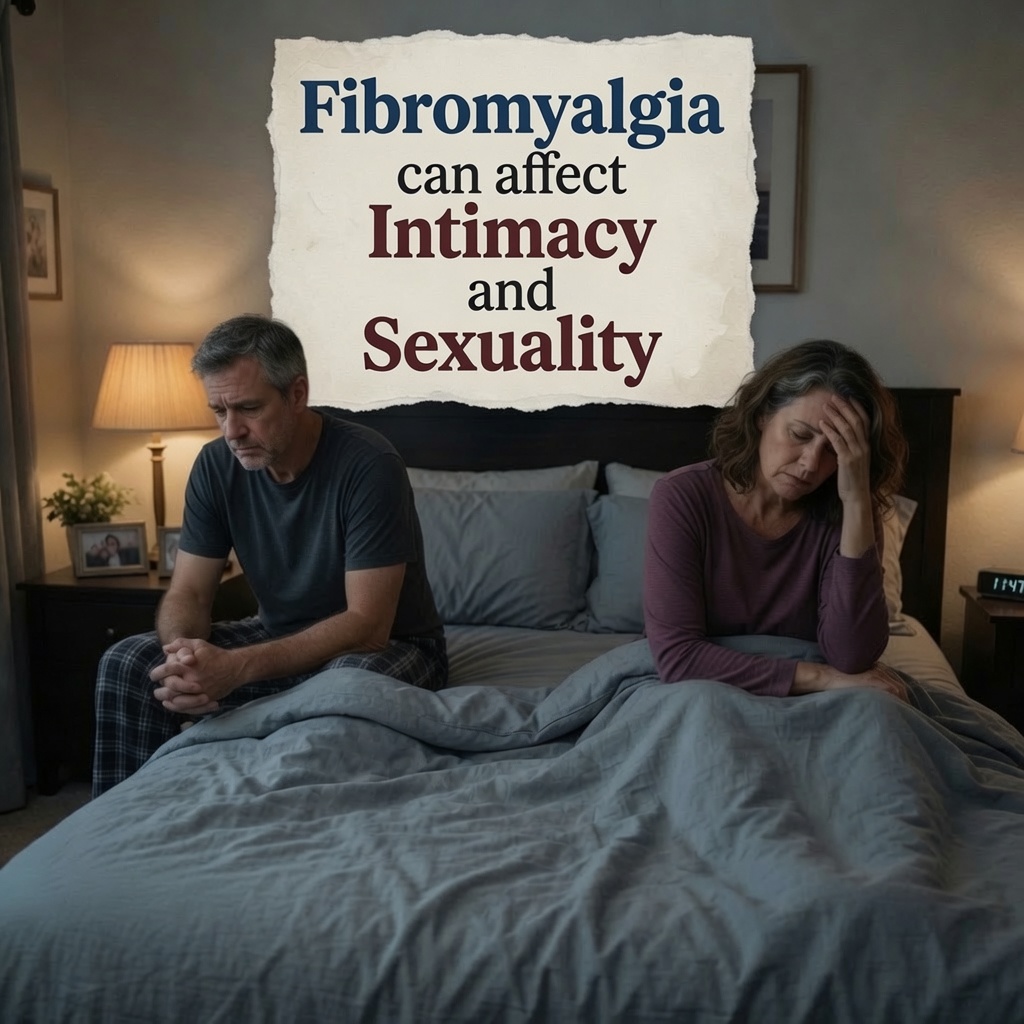
Fibromyalgia can affect sexual health through several overlapping pathways. It does not necessarily mean that attraction or love has disappeared; often, the body is protecting itself from anticipated pain, exhaustion or overstimulation.
Physical effects
Pain and tenderness: Pressure, repetitive movement, certain positions or even light touch may hurt. During a flare, someone may avoid being touched because their nervous system is unusually sensitive to both painful and normally non-painful sensations.
Fatigue and poor sleep: A person may want intimacy emotionally but lack the physical energy to initiate or sustain it. Poor sleep has also been associated with greater fibromyalgia severity and poorer sexual functioning.
Stiffness and limited positioning: Hip, back, neck, shoulder or pelvic discomfort can make familiar sexual positions difficult to tolerate.
Changes in sexual response: Research has identified difficulties involving desire, arousal, lubrication, erection, orgasm, satisfaction and pain during intercourse among both women and men with fibromyalgia.
Pelvic-floor pain: Some people develop tight or poorly coordinated pelvic-floor muscles, which can contribute to genital or pelvic pain, painful penetration and difficulty relaxing.
Emotional and relationship effects
Chronic pain can change how someone sees their body and may produce anxiety about disappointing a partner, causing a flare or being unable to “perform.” Depression, anxiety, irritability and reduced confidence can further suppress desire and enjoyment.
A difficult cycle can develop:
pain or fatigue → avoidance → partner feels rejected → pressure increases → anxiety and muscle tension increase → intimacy becomes even harder.
Neither partner may be doing anything wrong. The problem is often that the couple continues expecting intimacy to function exactly as it did before fibromyalgia.
Medication effects
Some medications particularly certain antidepressants can reduce desire, interfere with lubrication or erection, delay orgasm or make orgasm difficult. Medication should not be stopped or changed abruptly, but sexual side effects should be discussed openly with the prescriber.
Practical ways to re-engage
- Remove intercourse as the immediate objective
Start by restoring safe, affectionate contact without an expectation that it must lead to penetration or orgasm. This can include:
- Holding, cuddling or lying together.
- Gentle massage in areas that are not tender.
- Kissing, skin-to-skin contact and mutual touch.
- Non-penetrative sexual activity.
- Stopping while the experience is still comfortable.
Studies examining couples living with fibromyalgia describe communication, touching, foreplay, new positions and non-coital intimacy as useful adaptations.
This matters because pressure to “complete” sex can make every touch feel like the beginning of an obligation.
- Use a simple communication system
Before beginning, identify:
- Where touching feels good.
- Where touch is uncomfortable.
- What symptoms are present that day.
- What type of intimacy is realistically possible.
A straightforward system can help:
- Green: comfortable continue.
- Yellow: becoming uncomfortable change pressure, position or activity.
- Red: stop without disappointment or argument.
The agreement must be that stopping is not rejection.
- Choose the best time rather than the traditional time
Intimacy does not have to happen late at night when fatigue is greatest. Consider times when pain and energy are usually better, such as after rest or earlier in the day.
Avoid scheduling intimacy immediately after demanding activities. Think of available energy as a limited budget: spending it all before intimacy makes failure more likely.
- Reduce physical strain
Experiment with:
- Side-by-side positions.
- Positions in which the person with fibromyalgia controls movement and depth.
- Pillows or wedges supporting the hips, knees, back or shoulders.
- Shorter encounters with rest breaks.
- Slow transitions between positions.
- Warm showers, baths or approved heat therapy beforehand.
There is no universally “best” position. The correct position is the one that minimizes pressure on the individual’s most sensitive areas.
- Address dryness and friction
A generous amount of fragrance-free lubricant can reduce friction-related discomfort. Persistent vaginal dryness, genital irritation or menopausal symptoms should be assessed by a physician because additional treatment may be available.
Pain should not simply be pushed through. Repeatedly enduring painful penetration can strengthen fear, guarding and avoidance.
- Consider pelvic-floor physiotherapy
A pelvic-health physiotherapist can assess whether pelvic-floor muscles are overly tight, weak or poorly coordinated. Treatment may involve relaxation, breathing, positioning, gradual exercises and other individualized techniques intended to reduce pelvic pain and improve sexual function. Pelvic-floor therapy is used for people of all genders.
- Review the wider fibromyalgia treatment plan
Improving intimacy may require better management of:
- Baseline pain.
- Sleep disturbance.
- Fatigue.
- Depression or anxiety.
- Medication side effects.
- Menopause or hormonal symptoms.
- Erectile difficulties.
- Pelvic or genital pain.
Treating the sexual problem separately while ignoring uncontrolled sleep disruption, depression or pain is unlikely to produce a durable improvement.
- Seek specialized support when needed
A certified sex therapist or couple’s therapist familiar with chronic pain can help the couple separate affection from performance, manage mismatched desire and rebuild trust around touch. Relationship quality can be protective for emotional well-being in fibromyalgia, but partners may need guidance to prevent pain and avoidance from becoming interpreted as personal rejection.
A realistic re-engagement sequence
A useful progression is:
- Restore emotional safety: talk about symptoms and fears outside the bedroom.
- Restore non-sexual affection: touch with an agreement that it leads nowhere else.
- Introduce pleasurable touch: short sessions without penetration or orgasm as requirements.
- Experiment gradually: change one variable at a time, timing, position, duration or type of activity.
- Review afterward: identify what felt good, what aggravated symptoms and what should change next time.
The objective is not to recreate the couple’s previous sex life exactly. It is to develop a new form of intimacy that remains pleasurable, consensual and sustainable within the person’s current physical capacity.